
Palestinian History Tapestry
Narrating by embroidery
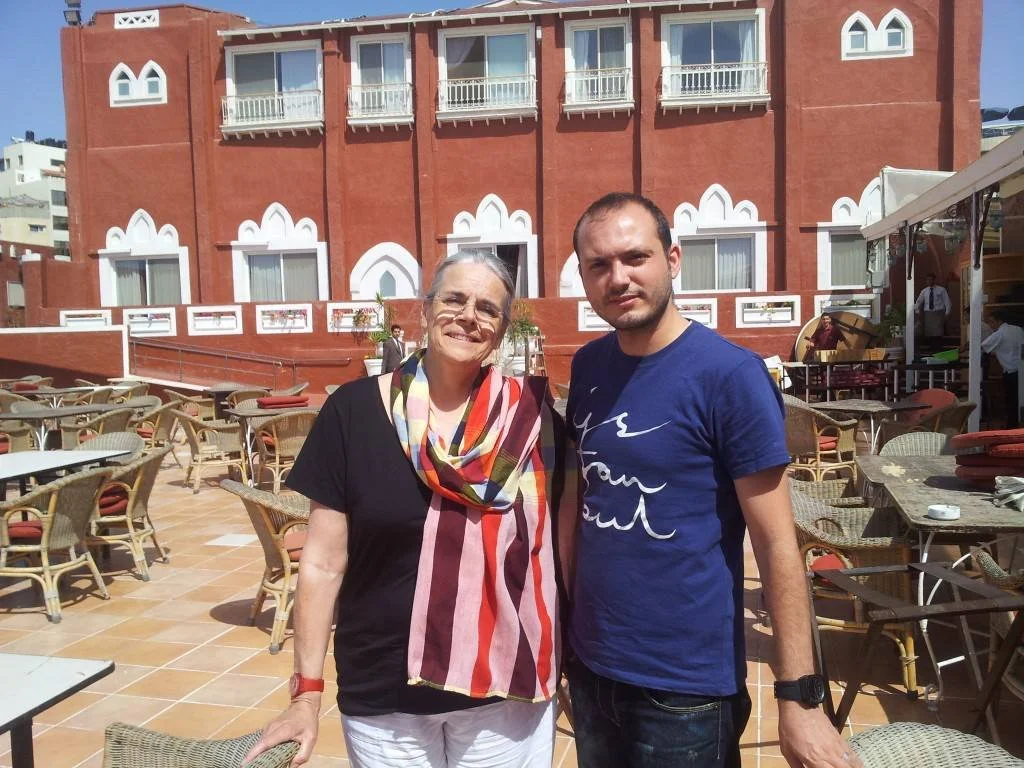
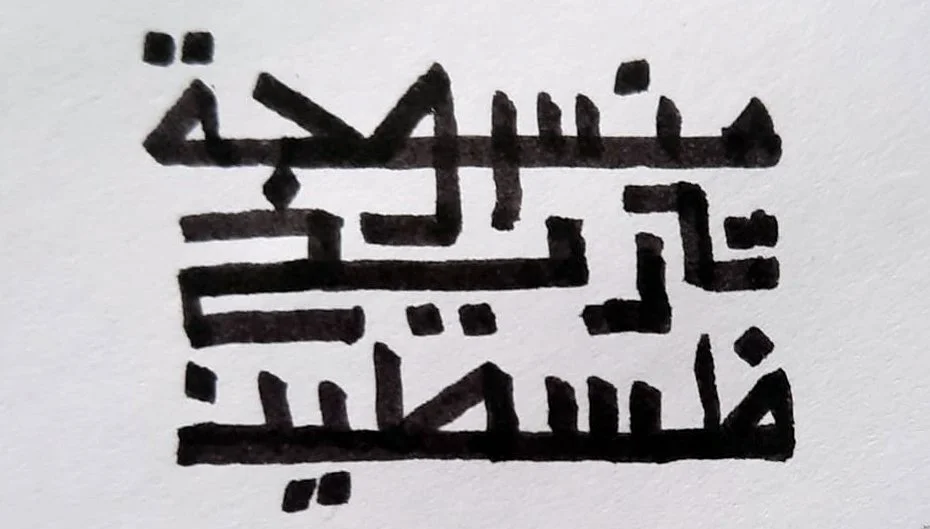
The award winning Palestinian History Tapestry - UK-based project - uses the embroidery skills of Palestinian women to illustrate aspects of the land and peoples of Palestine. Since 2012, I have been involved with the Palestinian History Tapestry (PHT) Project, after meeting the founder, Jan Chalmers, during her visit to Gaza.
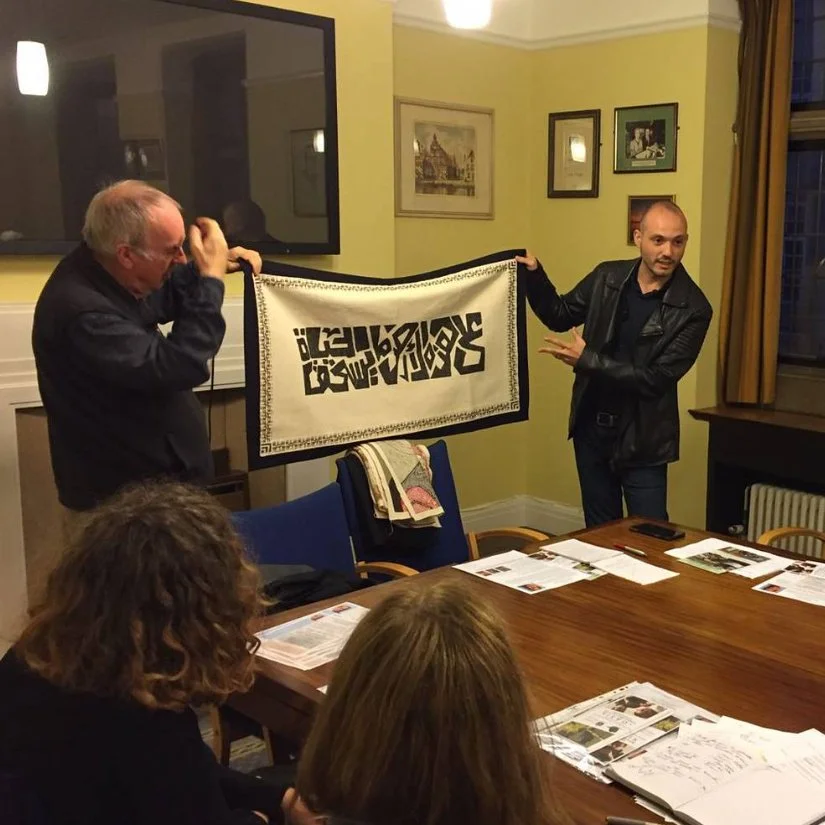
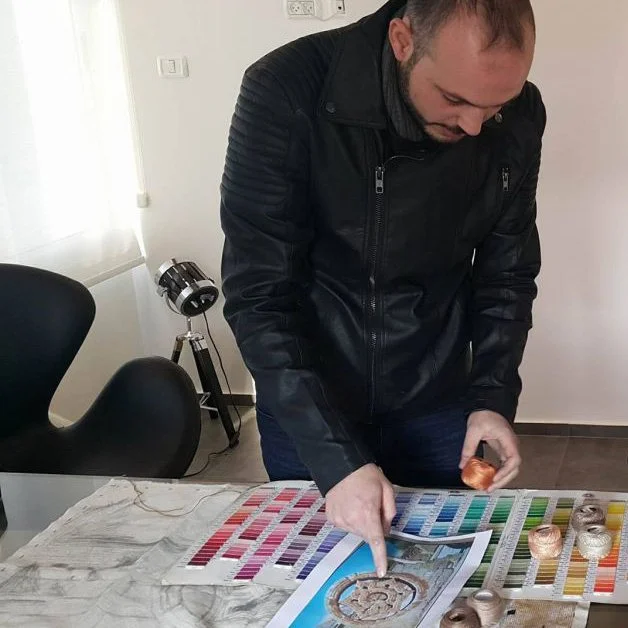
Jan Chalmers & Ibrahim Muhtadi, Al Deira Hotel, Gaza, 2013
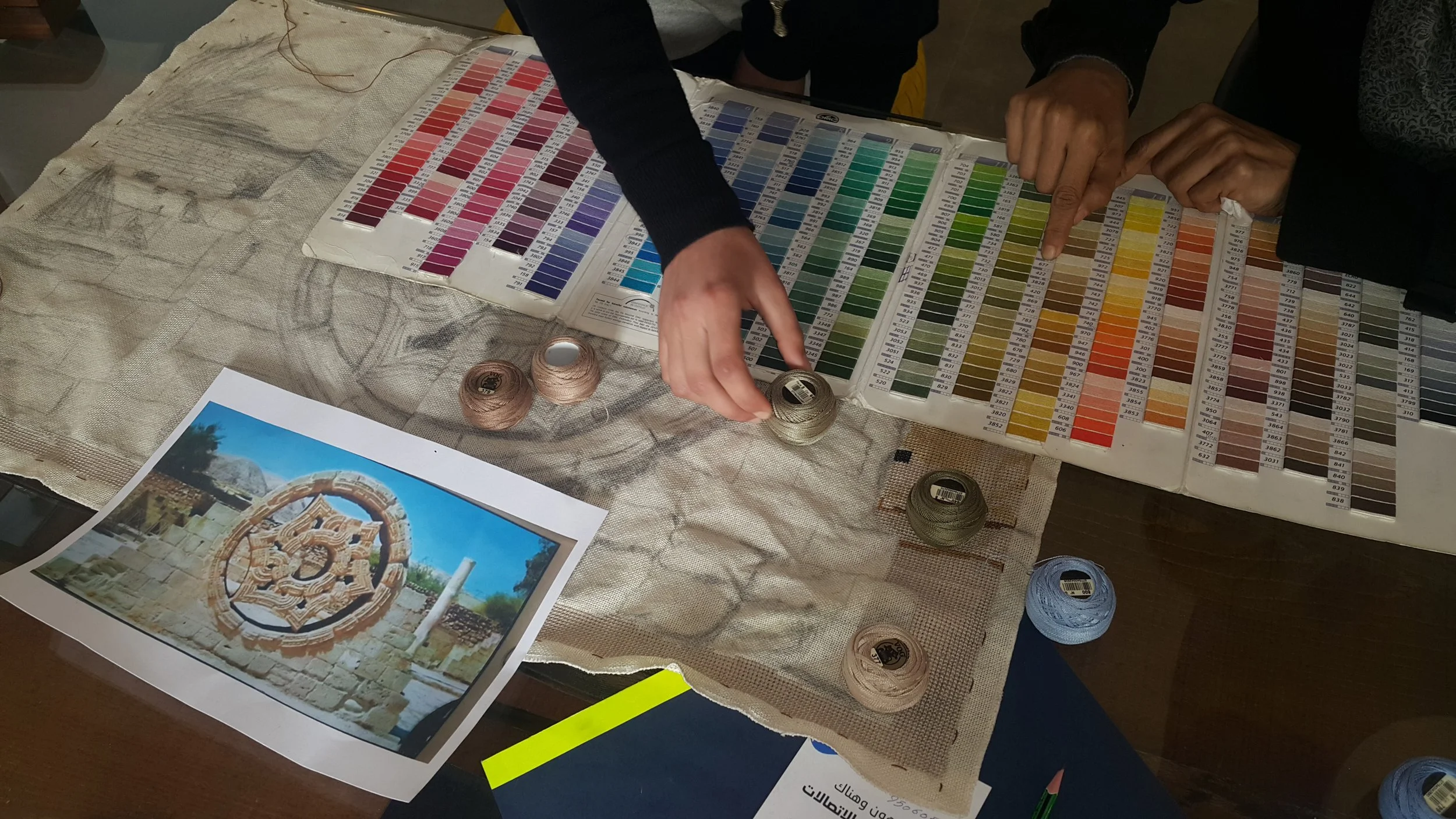
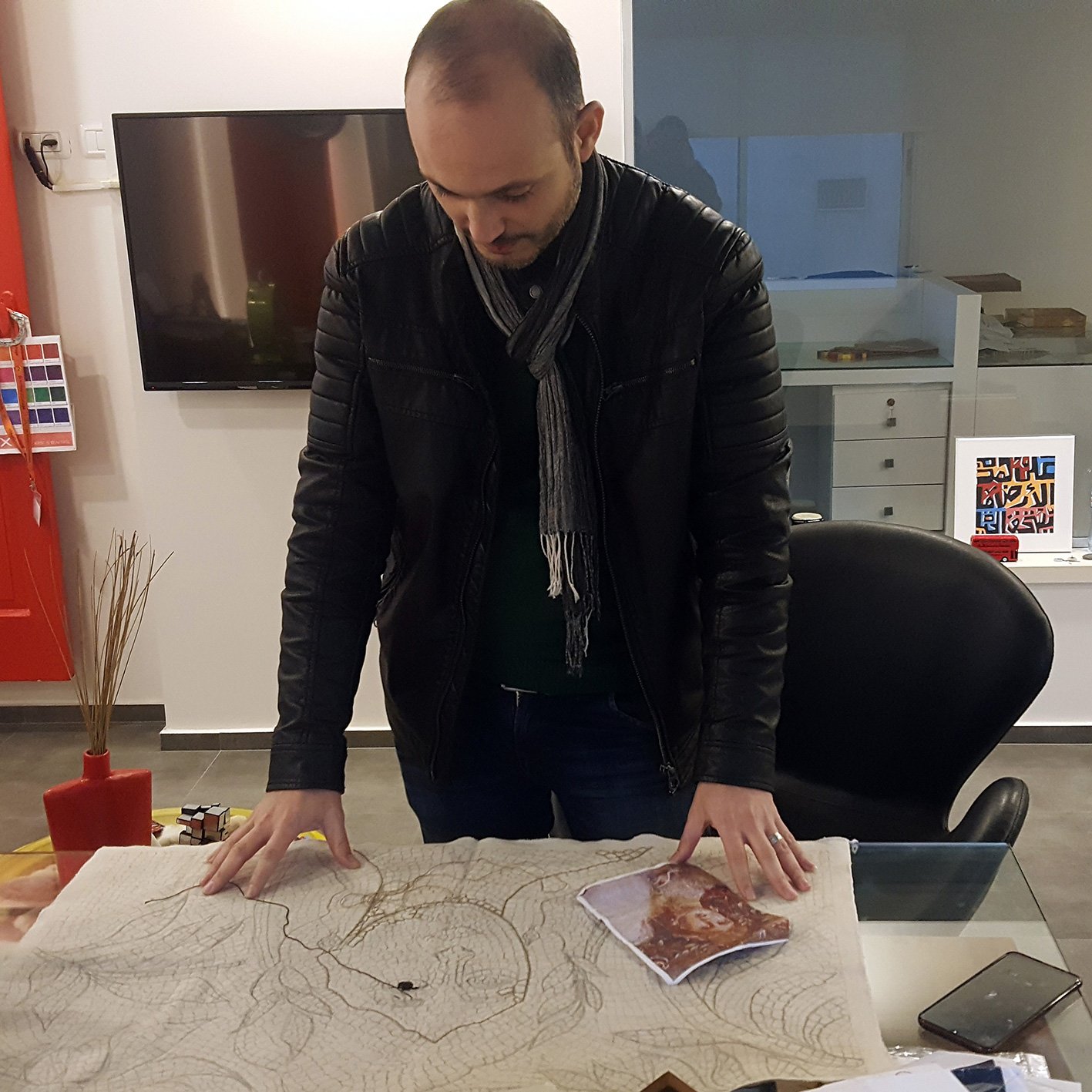
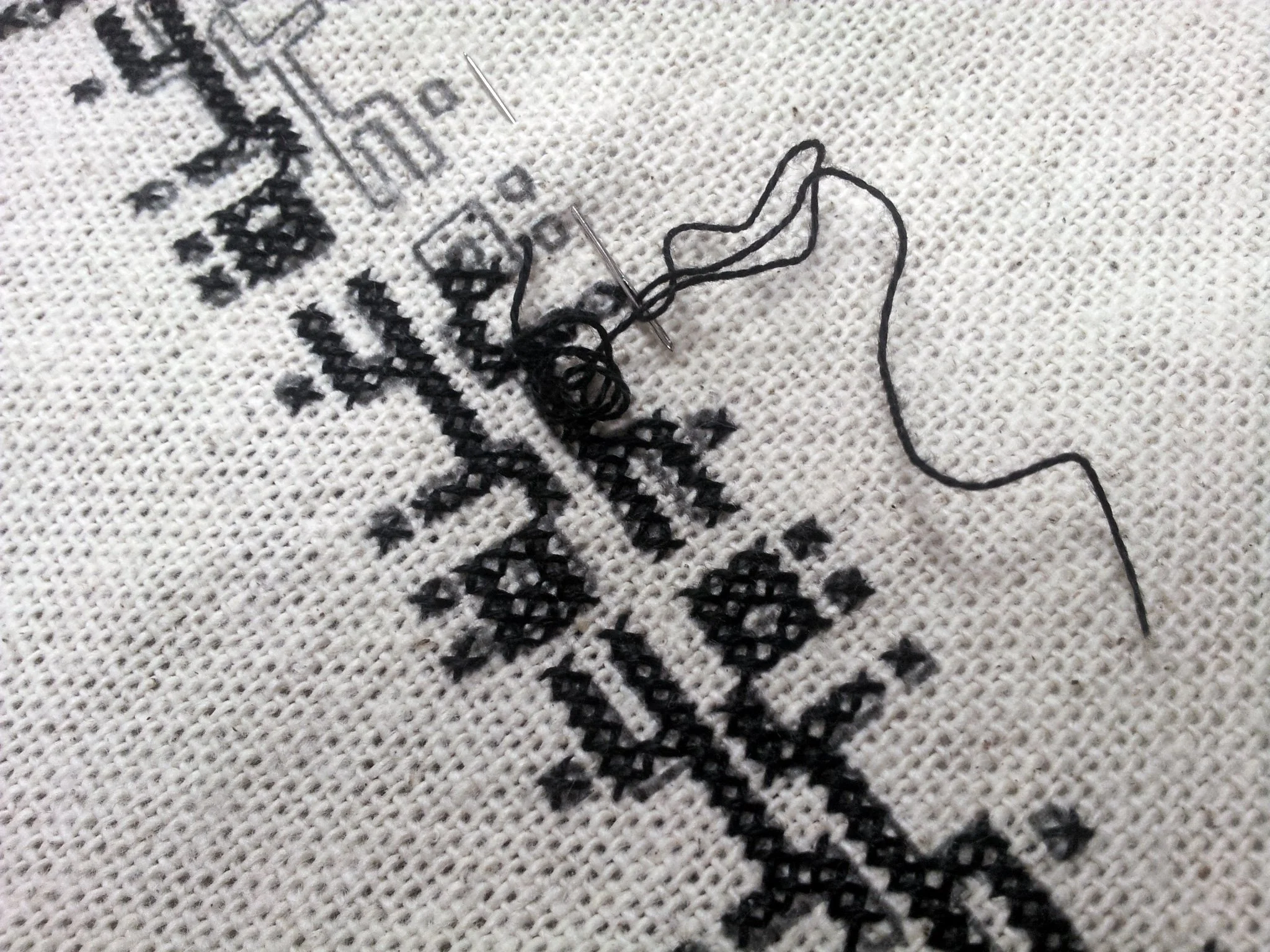
I began by supporting panel designs, helping with production, and choosing colors in collaboration with talented women embroiderers in Gaza. I contributed to the creation of over 100 embroidered panels, produced in Gaza, the West Bank, Jerusalem, the Naqab, Jordan, and Lebanon.
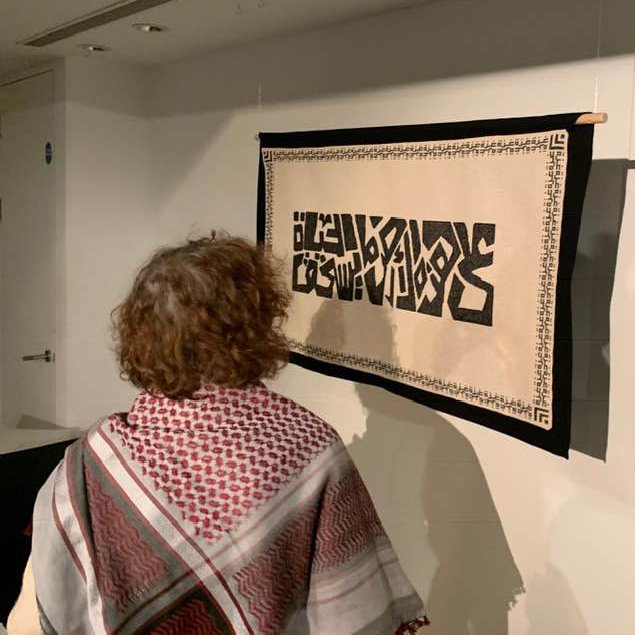
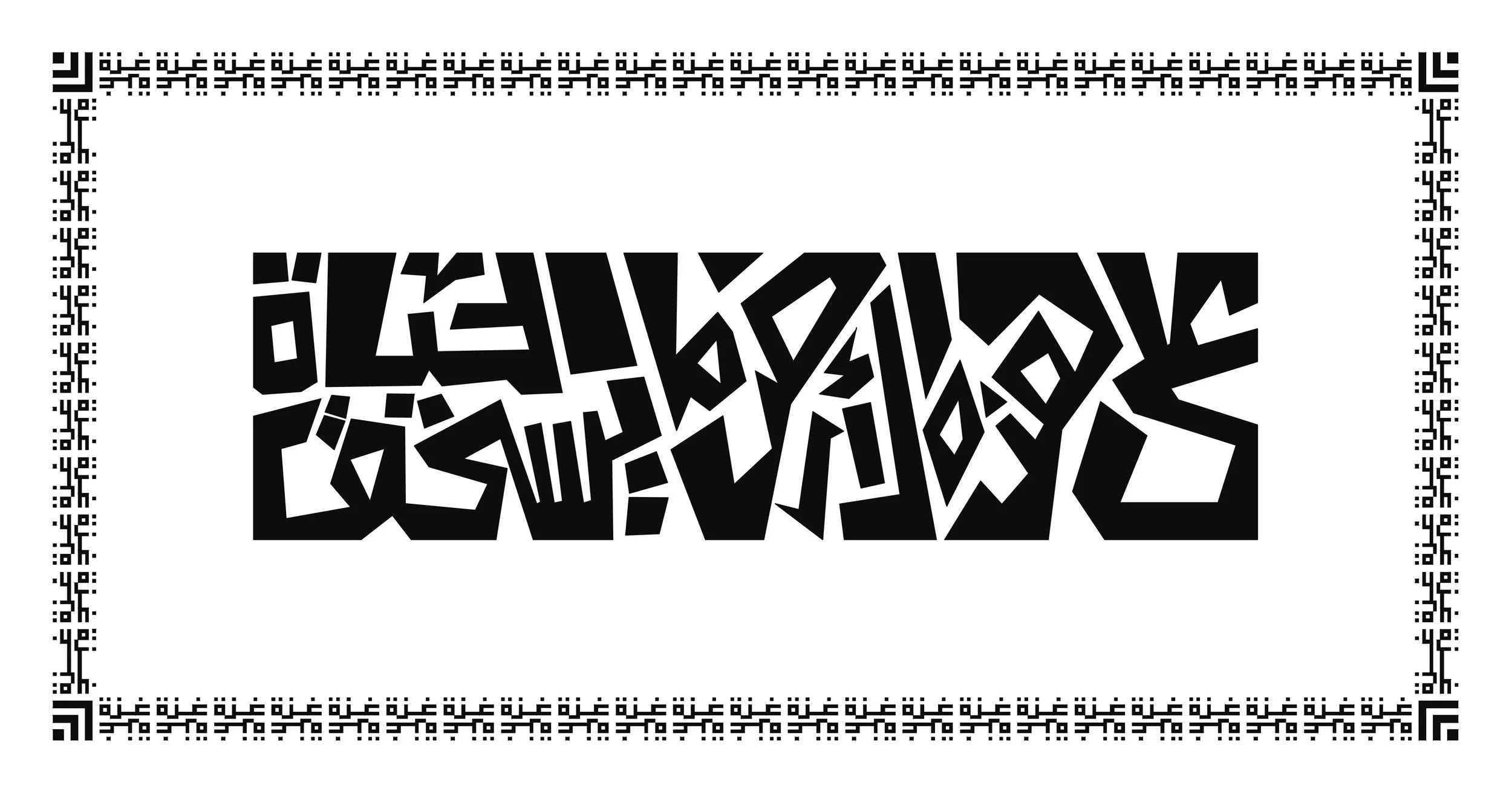
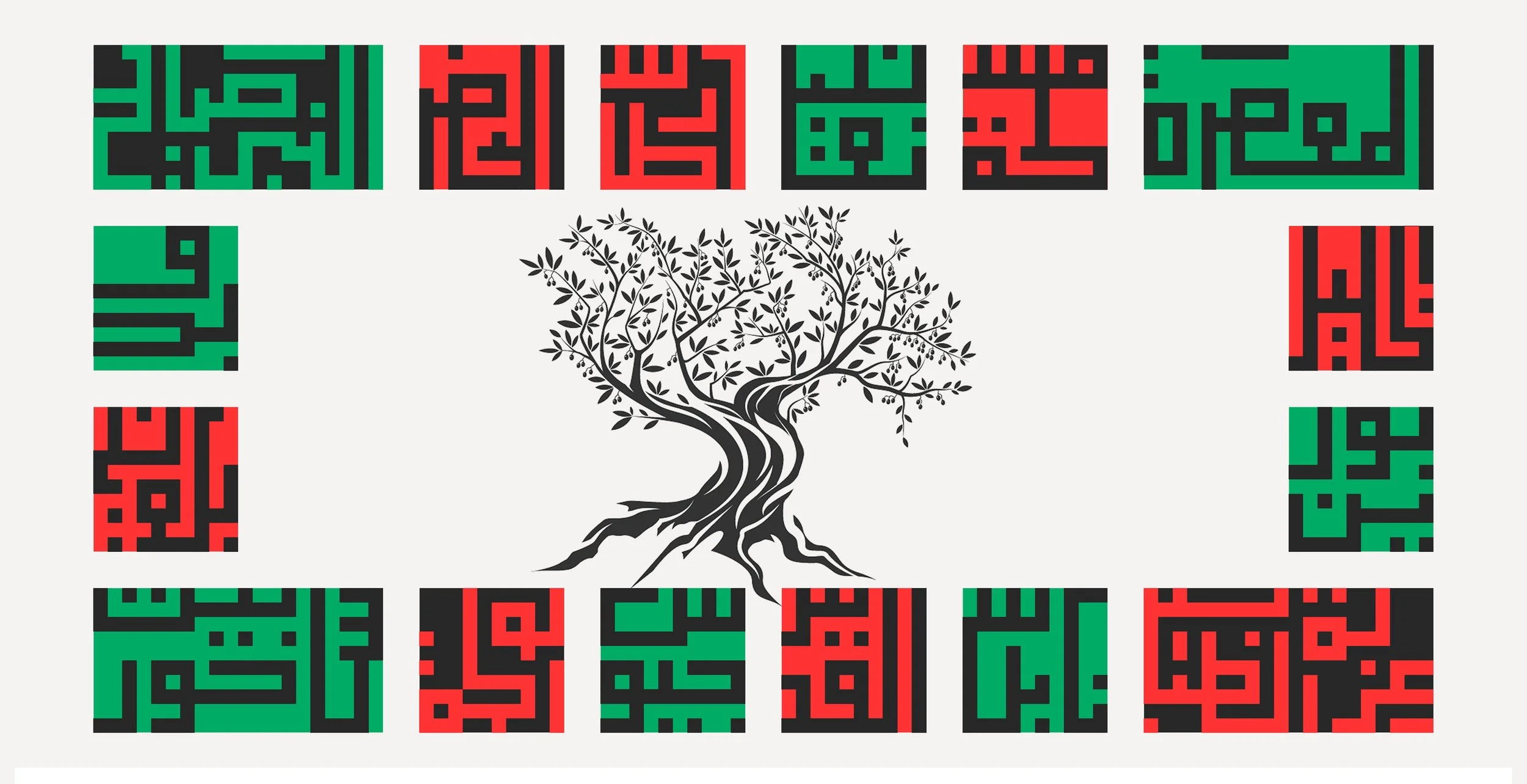
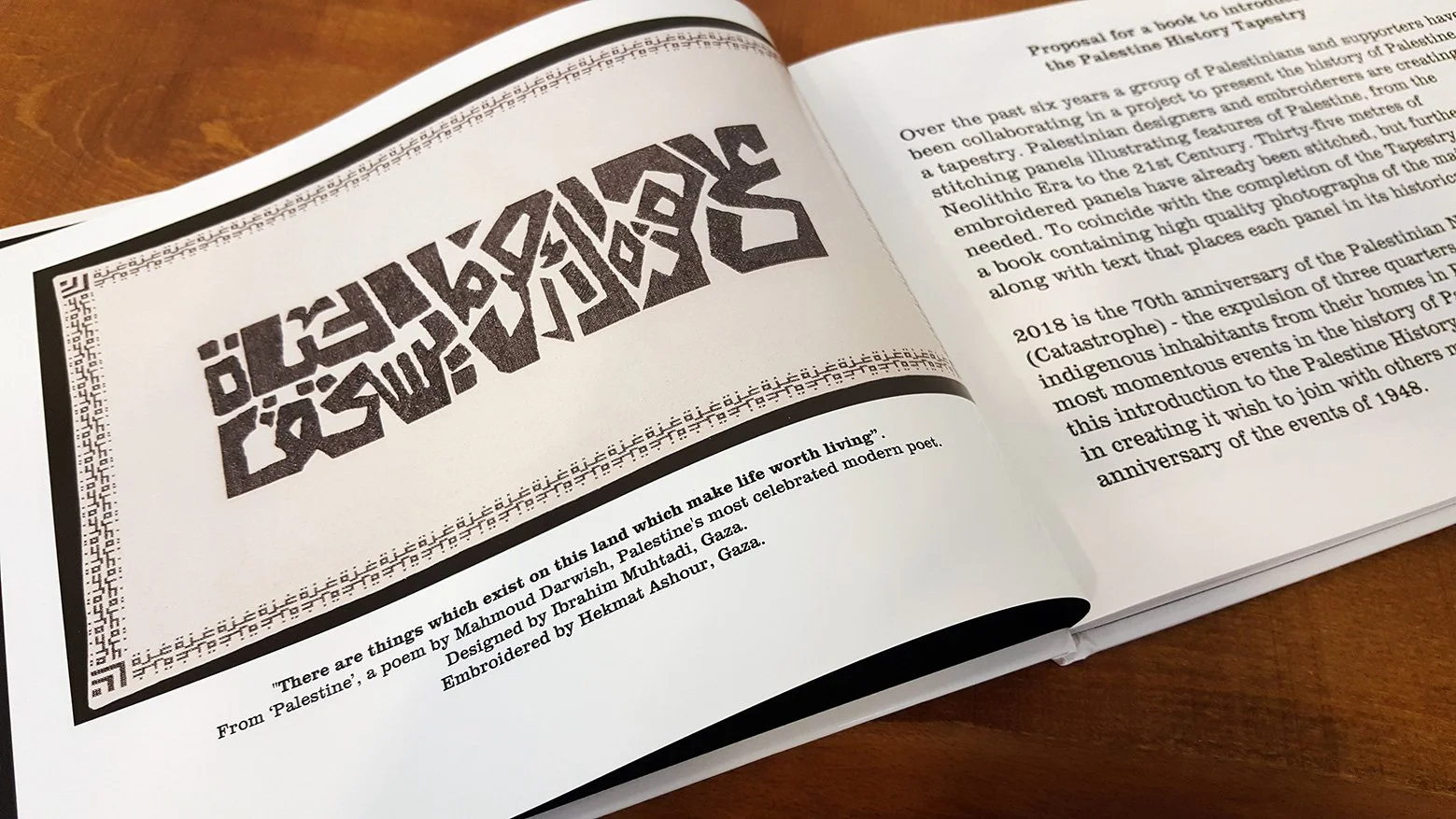
I also serve as a design adviser and member of the steering committee, contributing to several panels, including the well-known calligraphy design with Mahmoud Darwish’s quote “On this Land, What Worth Living For.”
In 2017 and 2018, I visited the UK, where I joined events including the project’s official launch in London. During that time, I helped develop ideas for promoting and expanding the project’s reach.
In 2021, I was appointed co-chair of the Palestinian History Tapestry project. and contributed to establishing the Mansoja webshop , a platform developed to share and promote Palestinian products inspired by cultural heritage and the designs of the PHT embroidered panels.
By the end of 2024, the project found a permanent home at the Palestinian Museum in the United States, where the tapestry is now on public display.
Process
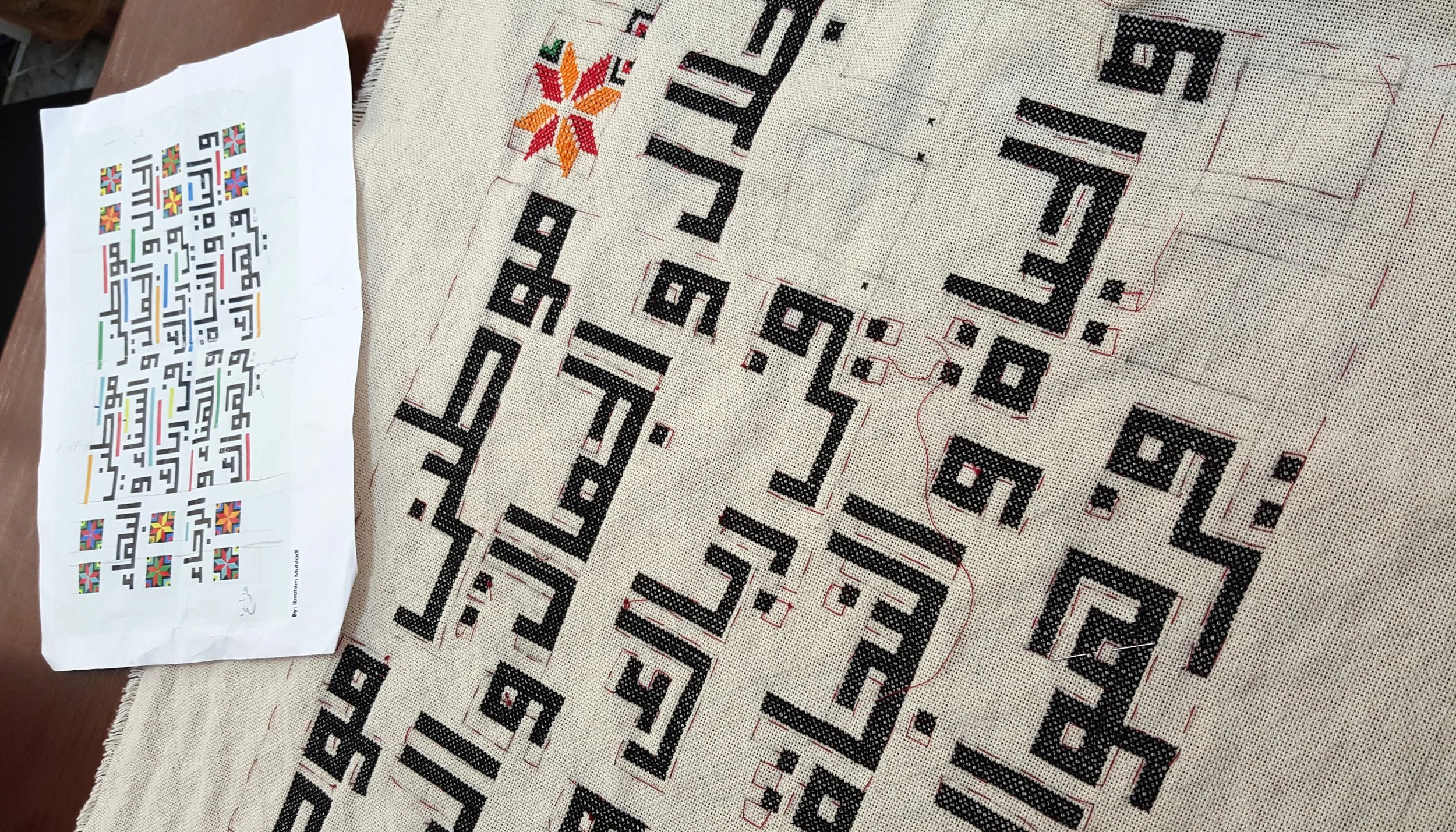
Panels
“On this land”, Mahmoud Darwish, Palestinian National Poet
"على هذه الأرض ما يستحق الحياة"
“We have on this land that which makes this life worth living”. Mahmoud Darwish, Palestinian National Poet.
Design: Ibrahim Muhtadi [Al Quds], Gaza, Palestine
Embroidery: Hekmat Ashour [Gaza], Gaza, Palestine
Size: 59 x 102 cm
Popular resistance
المقاومة الشعبية
In his 2011 book Popular Resistance in Palestine, Mazin Qumsiyeh documents the many ways in which the indigenous people of Palestine have resisted oppression. Non-violent resistance has been far more common and enduring than violent resistance
Design: Ibrahim Muhtadi, Gaza, Palestine
Embroidery: Khawla Dahrouj, Gaza, Palestine
Size: 59 x 102 cm
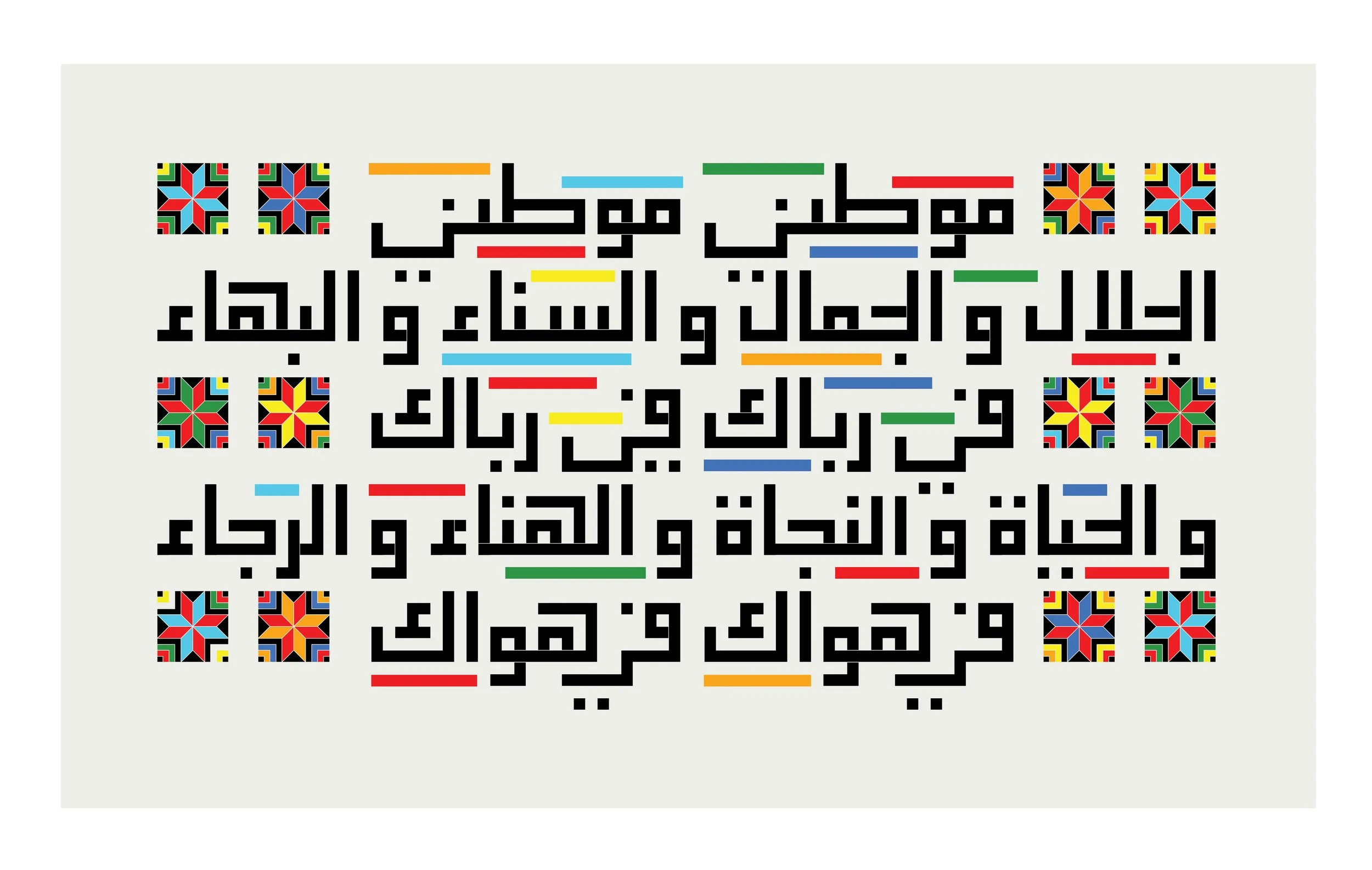
‘Mawtini’ (My Homeland),
"موطني"
‘Mawtini’ is a popular poem written by the Palestinian poet Ibrahim Tuqan. In the 1930s it was set to music composed by the Lebanese composer Mohammed Flayfel. It served as Palestine’s de facto national anthem until 1996, when it was officially replaced by ‘Fida’i’.
Design: Ibrahim Muhtadi, Gaza, Palestine
Embroidery: Jamela al-Bura’ai, Gaza, Palestine
Size: 59 x 87 cm
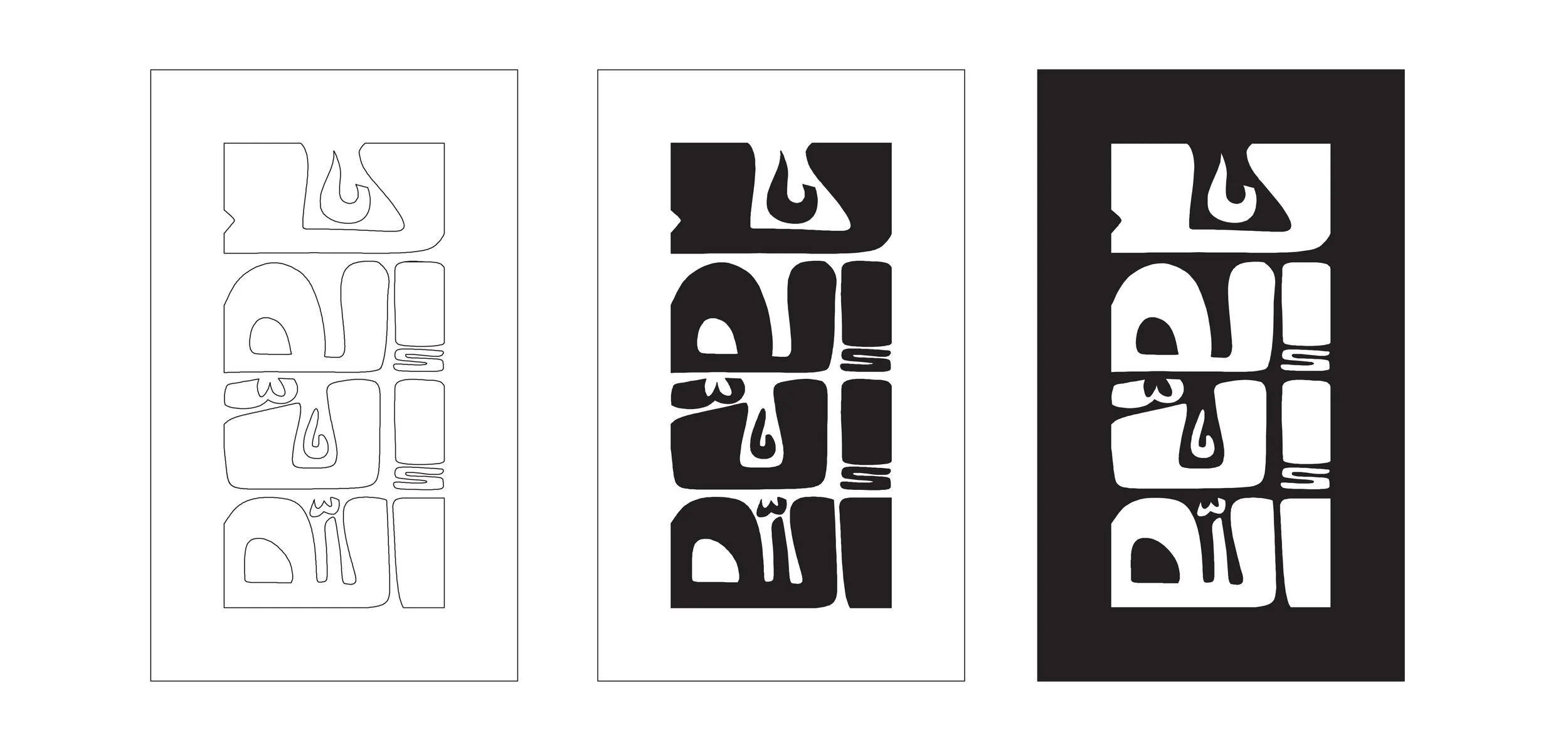
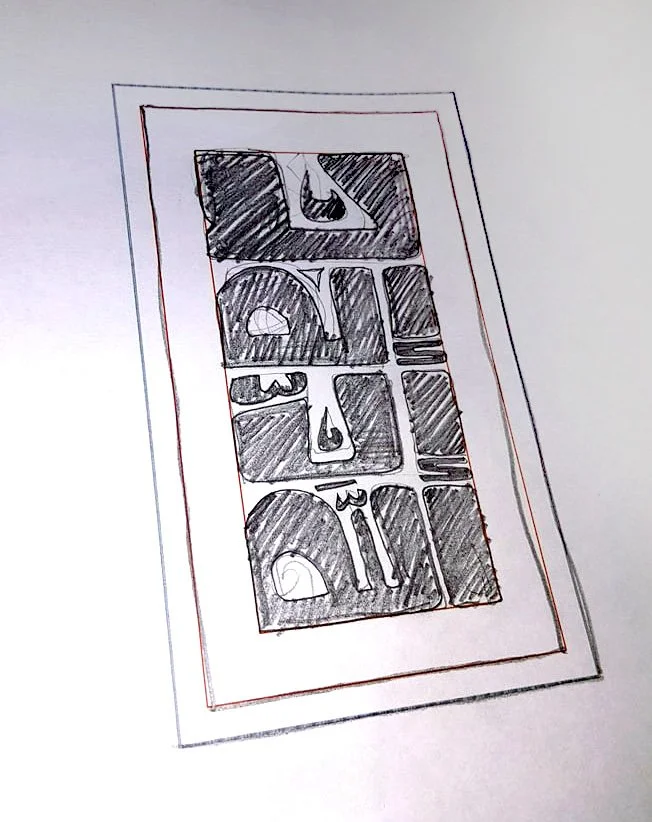
No God but Allah
"لا اله الا الله"
Design: Ibrahim Muhtadi, Gaza, Palestine
Embroidery: Awatif Bader , Gaza, Palestine
Size: 59 x 38 cm
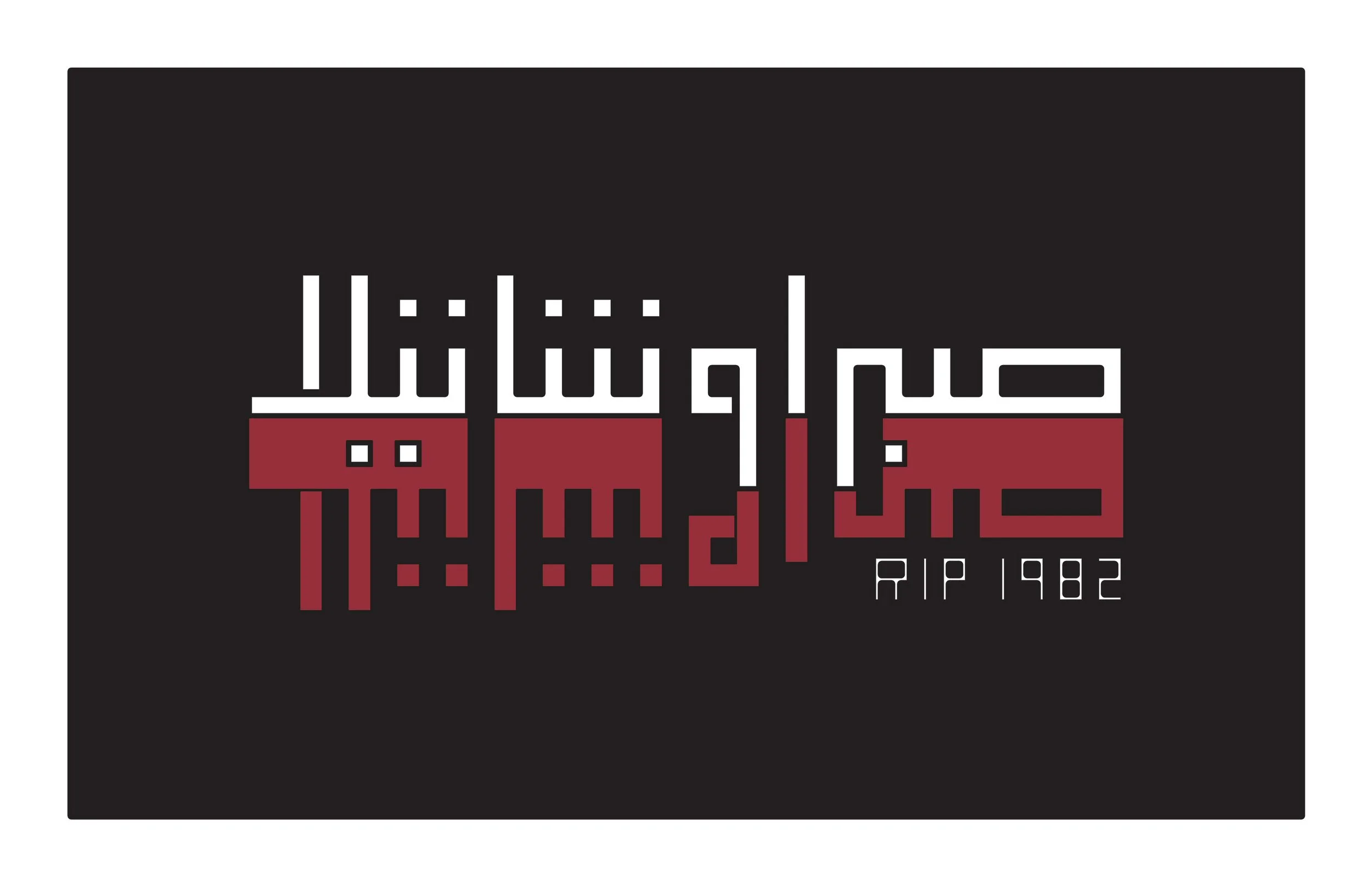
Sabra and Shatilia remembered, 16-18 Sept 1982
مجزرة صبرا و شاتيلا، ١٩٨٢
Design: Ibrahim Muhtadi, Gaza, Palestine
Embroidery: Khawla Rubi, Gaza, Palestine
Size: 59 x 79 cm
Prototypes
Handmade cross-stitch cushion cover, featuring Arabic calligraphy inspired by the poem “We have on this land that which makes life worth living” by Mahmoud Darwish.
Handmade cross-stitch cushion cover, featuring a vibrant design inspired by the scene of a traditional Palestinian wedding celebration
Handmade cross-stitch cushion cover, featuring a symbolic design inspired by the “Sun of the Keys” representing hope and the right of return. The radiant key motif rises over the skyline of an old Palestinian city, capturing the dream of home.
Handmade cross-stitch cushion cover, featuring a design inspired by the Key of Return — a powerful symbol of memory, identity, and the right of Palestinians to return to their homeland.
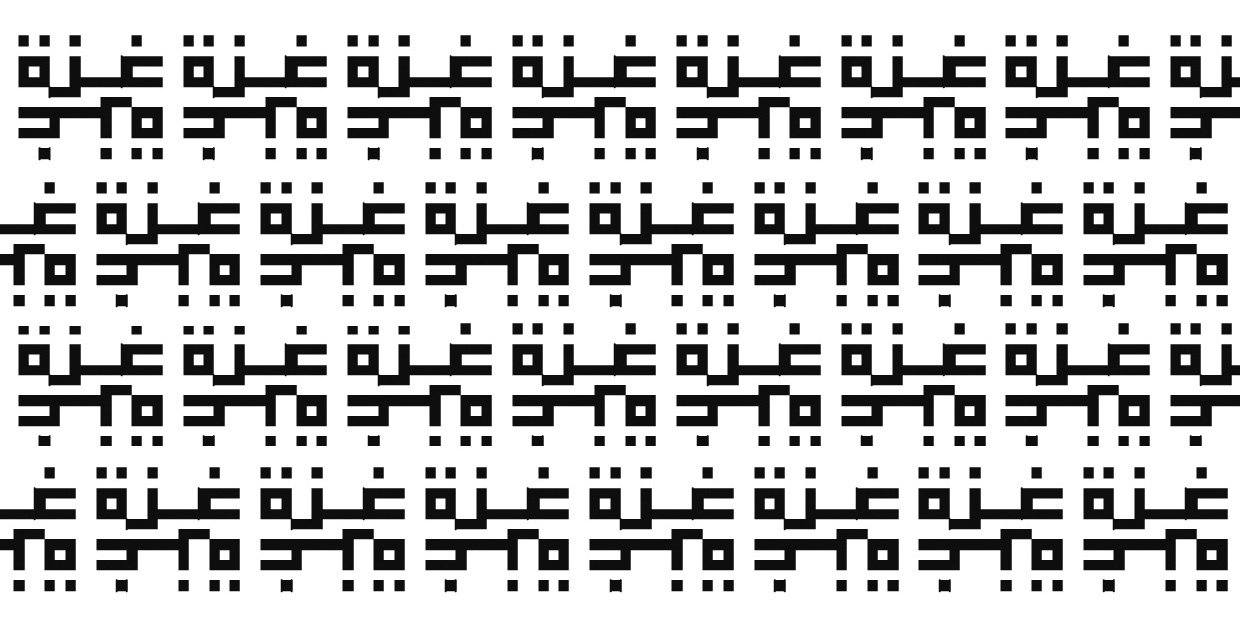
Handmade cross-stitch bookmark, featuring the word Gaza in a repeated geometric pattern. The design transforms the name into a striking visual rhythm
Handmade cross-stitch bookmark, featuring the Palestinian flag. This compact design is perfect for carrying a piece of Palestine in your everyday moments of reading.